


Remember the Ladies
Wednesdays at 10:04, Summer 2026
In honor of our nation's 250th birthday and inspired by Abigail Adams's call in 1776, we "Remember the Ladies" - celebrating Georgia women in history.
Conceived and written by: Margaret Holt, Suzanne Minarcine, Madeline Van Dyck and Marilyn Vickers. Edited and produced by Lara Dua-Swartz.
-
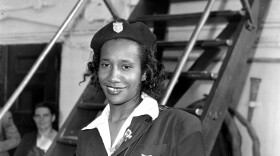 At the 1948 Olympics, she set a record for high jump, becoming the first African-American woman to win an Olympic gold medal.
 -
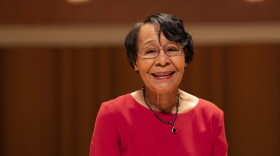 Mary Frances Early was a historic trailblazer in the struggle to desegregate UGA.
 -
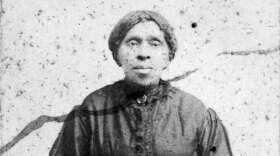 Harriet Powers was an American folk artist and quilter. Born a slave near Athens, GA, in 1837, she learned her quilt-making skills on the plantation where she was raised.
 -
 Born in 1924, Dr. Louise McBee started her career as a high school teacher. She came to the University of Georgia in 1963 as the Dean of Women and retired in 1988 as acting Vice President for Academic Affairs.
 -
 Monica Kaufman Pearson started her career when she was still in high school, reading prayers, and doing voiceovers for a local radio station.
 -
 Born in Athens in 1920, She graduated at the top of her high school class at age 15 and earned her Bachelor’s degree from UGA by the time she was 19.
 -
 Despite having a heart condition and chronic asthma, she chased her dreams of flying. While still in college, she became the first woman in Georgia to receive a pilot's license.
 -
 Dr. Lois Taylor Ellison was a pioneer in medicine and science. Born in Fort Valley, GA, she was inspired as a child to pursue medicine by her grandfather, a pharmacist.
 -
 Rosalynn Carter was the First Lady of the United States during the tenure of her husband, Jimmy Carter. High School sweethearts from Plains, GA, they were always equal partners.
 -
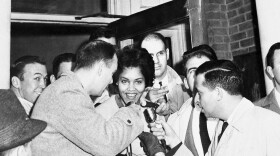 Charlayne Hunter-Gault is one of the first two African-Americans to integrate the University of Georgia in 1961. Although an ideal candidate for admission to UGA, she was initially rejected several times.


